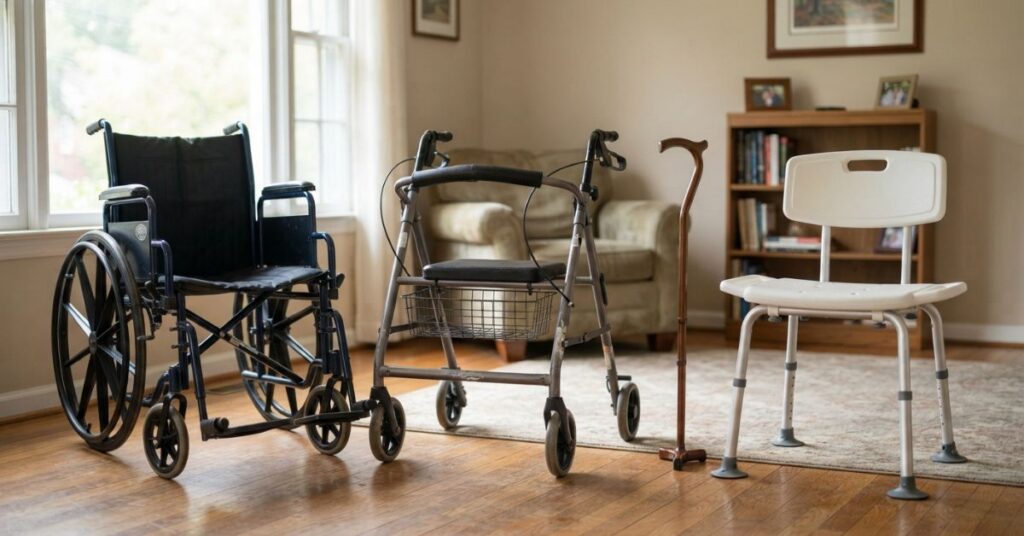

When someone dies in assisted living, everything in the apartment becomes part of their estate. The family usually has to clear the apartment sooner than they’d like, so start by reading the resident agreement.
Most families hold on to the photos, the jewelry, and a couple of favorite pieces. The rest gets passed to relatives, donated, or sold, and none of that has to be decided inside the apartment.
How Long Do You Have to Clear an Assisted Living Apartment After a Death?
There’s no one deadline. Each community writes its own move-out terms into the resident agreement, and many want the room back in weeks rather than months.
Some contracts are stricter than families expect. NBC10 Boston reported in 2025 on a senior living community whose 30-day notice period started on the date of death, so get the move-out date from the director in writing.
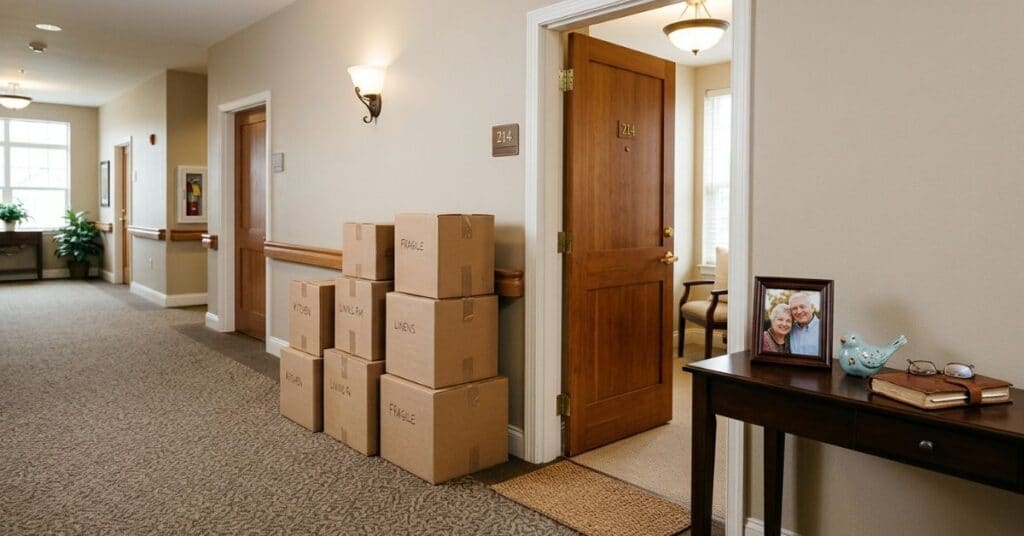
Assisted Living Fees After a Resident Dies
Fees can keep coming for a bit after a death. How long depends on the contract and on how quickly the room gets cleared.
Maryland’s assisted living resident agreement rules say charges after a death can’t cover services provided after the resident died. Administrative charges are still allowed, though.
Before paying anything, ask for a final statement. It’s also worth asking if clearing out early stops the charges sooner.
What the Assisted Living Resident Agreement Says About Belongings
Start with the resident agreement, since that’s where the community explains what it does with a resident’s belongings after a death. In Maryland it has to, because the rules require every agreement to cover resident property on discharge or death.
Look for two things: who the staff will hand the items to, and what happens to anything still there after the deadline. If the family’s copy is missing, ask the front office for one.
What to Remove First From an Assisted Living Room
Start with anything small and important, before the furniture. That’s the jewelry and watches, the wallet and ID, checkbooks, the last few weeks of mail, and the photos on the dresser.
Then open every drawer and handbag, and feel through the coat pockets. Cash and rings turn up in coats and handbags all the time.

Sorting Furniture and Keepsakes From an Assisted Living Apartment
Sorting an assisted living apartment is usually quicker than a house, because your loved one already chose what to bring. Let family members claim what they want, then split what’s left into donate and sell piles.
Anything that came over from the old house is worth a second look. A good dresser, a painting, or the family silver might be worth real money.
Closets are usually the hard part. Our guide to what to do with a loved one’s clothing, furs, and handbags goes through them one piece at a time.
And if there’s still a car in the community lot, our guide to selling a loved one’s car after death covers the title steps in Maryland, Virginia, and DC.
How iStuffSellers Helps With an Assisted Living Move-Out
iStuffSellers can handle the apartment as part of the whole estate, not as a separate job. When there’s a house too, Darren Hahnfeld can look at both, and nothing gets moved before it’s valued.
Our estate liquidation company then sorts, prices, and sells what’s worth selling. Usable pieces get donated and the rest is removed, so you don’t have to hire anyone else.
Frequently Asked Questions
What if no one in the family lives near the assisted living community?
Ask for a short extension first, then line up help before you book the flight. An estate liquidation company can sort, pack, and clear the room, and the family just comes for the keepsakes.
Are assisted living deposits or prepaid fees refunded after a death?
Check the refund section of the resident agreement. Maryland and Virginia both make assisted living communities spell out their refund policy, so ask for a written final accounting once the room is clear.
Should you sort belongings in the apartment or somewhere else?
Usually somewhere else, especially on a short deadline. Box it up, label the boxes, and go through it later at home, when nobody’s watching the clock.
Can assisted living furniture be donated?
Yes, if it’s clean and sturdy. Some local charities will even pick up from the building, so call around early.
Is anything in an assisted living apartment worth selling?
Usually just a few things, like fine jewelry, a good watch, art, or an antique from the family home. Everyday furniture and kitchen things don’t bring much, so most families donate them.
Get Help With a Loved One's Belongings
Once you have the agreement and the keepsakes are safe, everything else can follow a plan. You don’t have to work it out alone.
Call iStuffSellers at 301-401-6688 and we’ll help you figure out what to keep, sell, and donate. We’ve worked across Maryland, Northern Virginia, and Washington, DC, since 2011, and we’re licensed, bonded, and insured.