
Used furniture in like-new condition typically sells for 50 to 70 percent of its original retail price, gently used pieces for 30 to 50 percent, and worn but usable pieces for 10 to 30 percent. Era, maker, and materials move those figures in either direction, and solid wood holds value where particleboard does not.
If you are clearing a house in Montgomery County, downsizing, or deciding what to do with furnishings you have inherited, the first question is usually where to sell used furniture and what any of it is worth. This guide covers how furniture is valued, how to recognize the eras and styles that carry value, and which selling route fits the volume you are dealing with across Maryland and the wider DC metro.

Where to Sell Used Furniture in Maryland
The right place to sell used furniture in Maryland depends on whether you have one piece or a houseful. A single sofa or dining set can go to an online marketplace or a local consignment shop. A whole household of furnishings is a different problem, and routing it piece by piece usually costs more in time than it returns in price.
Online marketplaces reach a wide local audience across Rockville, Bethesda, Silver Spring, and the rest of Montgomery County, but they leave the photographing, pricing, messaging, scheduling, and heavy lifting with you. Consignment handles the selling in exchange for a share of the proceeds, which suits designer and individually valuable pieces; our furniture consignment service in Rockville, MD is built for exactly that.
Who Buys Used Furniture in Maryland and the DC Metro
The buyers for used furniture in this region fall into four groups, and each pays for something different. Dealers and resellers buy for resale margin, which means they pay below market. Private buyers on local marketplaces pay closer to market but buy one piece at a time and expect to negotiate.
Collectors pay the most, but only for the pieces they want: signed mid-century designs, period antiques, and well-made solid-wood furniture in original condition. Estate sale buyers are a mix of all three, which is why a properly marketed sale reaches the collector and the neighbor in the same weekend. Donation outlets such as the Habitat for Humanity ReStore locations in Rockville and Silver Spring take usable pieces and often collect them.
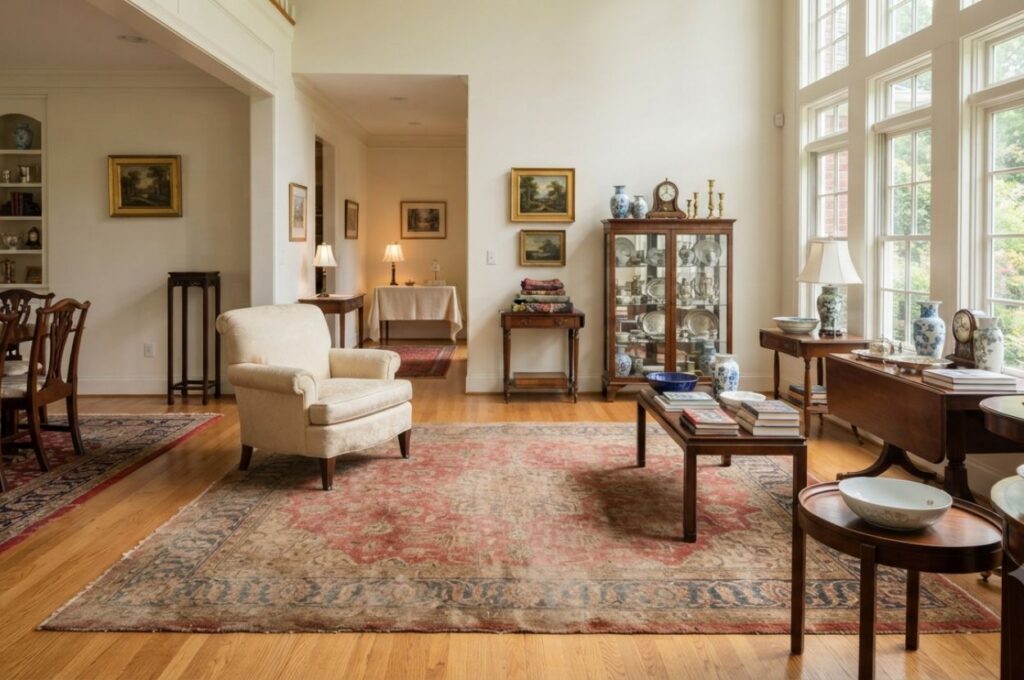
What Your Used Furniture Is Worth by Condition
Condition is the single largest driver of furniture value, ahead of brand and well ahead of original price. The table below gives the general resale ranges used across the DMV market, and the right number for any individual piece depends on its maker, materials, and era.
| Condition | What That Looks Like | Typical Share of Original Retail | Route That Usually Fits |
|---|---|---|---|
| Like new | No visible wear, all hardware and drawers sound, no fading or marks | 50 to 70 percent | Consignment or an estate sale |
| Gently used | Light surface wear, minor scratches, structurally sound throughout | 30 to 50 percent | Estate sale or a local marketplace |
| Worn but usable | Visible scratches, sticking drawers, worn upholstery, still functional | 10 to 30 percent | Estate sale or donation |
| Damaged or incomplete | Structural damage, missing hardware, water or pet damage, odor | Little to no resale value | Donation where accepted, otherwise cleanout |
| Antique or signed design | Documented period piece or a recognized maker, original finish intact | Priced on the market, not on retail | Auction, consignment, or a marketed estate sale |
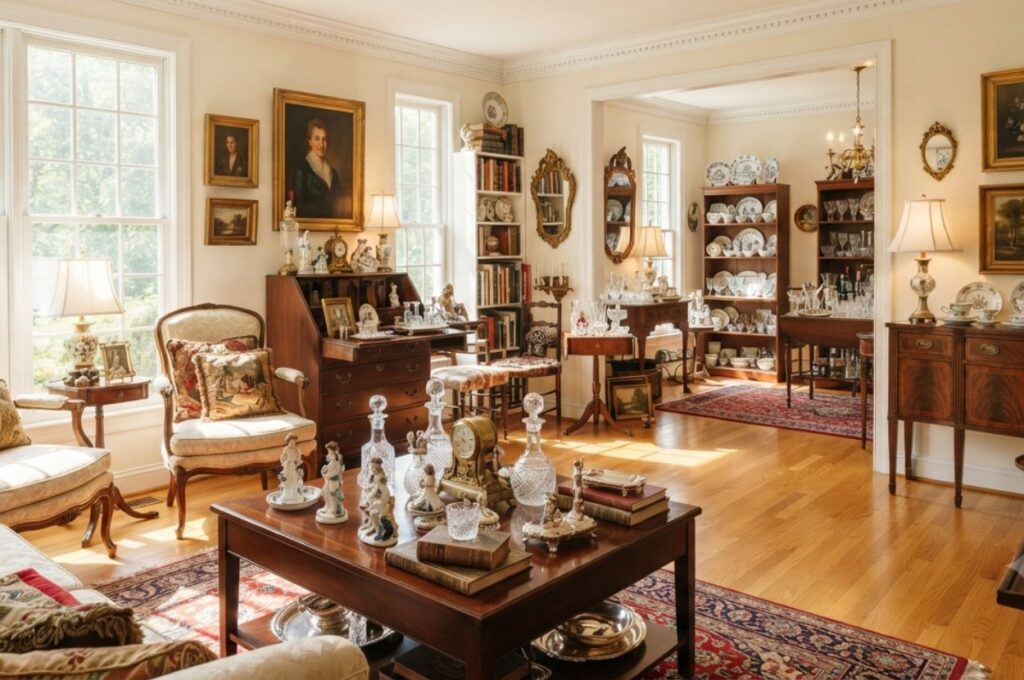
How to Identify Mid-Century Modern Furniture in an Estate
Mid-century modern furniture was made roughly between the 1940s and the 1960s and is recognized by clean lines, tapered legs, organic shapes, and honest materials such as teak, walnut, molded plywood, fiberglass, and steel. It is the category most often undervalued in Maryland estates, because it looks like ordinary older furniture to an untrained eye.
Value concentrates in named designers and manufacturers. Pieces by Charles and Ray Eames, Hans Wegner, Arne Jacobsen, and the American makers of the period carry a collector market that has held and grown for two decades, and a maker’s label, a stamp under a drawer, or a foil tag on the underside of a chair is what separates a designed piece from a period-styled one. Check the undersides before anything is moved or refinished.
Antique Furniture Eras and How They Affect Value
Older furnishings are priced by period, construction, and originality rather than by any share of retail. The periods that show up regularly in DC metro estates run from Georgian and Federal pieces through Victorian, Arts and Crafts, Art Nouveau, and Art Deco, and each carries its own market and its own buyers.
Construction tells you more than style does. Hand-cut dovetails, mortise-and-tenon joinery, solid secondary woods, and original hardware indicate age and quality, while machine-cut uniform dovetails and plywood backs point to later manufacture or reproduction. Original surfaces matter more than most sellers expect, and refinishing an antique before a sale frequently reduces its value rather than improving it.
Arts and Crafts oak, Victorian mahogany and walnut, and Art Deco veneered pieces all move at very different prices depending on maker and condition. Where a household includes older furnishings mixed in with ordinary furniture, our guide on how to sell antiques from an estate in Rockville covers the decision in detail.
What Drives Furniture Value Beyond Condition and Age
After condition, value follows materials, maker, and completeness. Solid walnut, oak, teak, mahogany, and cherry hold value over decades; particleboard, laminate, and flat-pack construction do not, regardless of how little the piece has been used. A recognized manufacturer’s label reliably adds value where an unlabeled piece of similar quality will not.
Completeness matters more than sellers expect. A dining set with all its leaves and matching chairs sells as a set, while the same table alone sells as a table. Original hardware, original upholstery on period pieces, and any accompanying documentation all support the price, and size works against it: oversized wall units, formal dining suites, and heavy bedroom sets are harder to place than smaller, movable pieces.
Sale the contents of your home
Here are the items you can sell with iStuffSellers.
What Furniture Does Not Sell, and What to Do With It
Some furnishings have no resale market, and recognizing them early saves everyone time. Large formal dining suites, entertainment centers built for older televisions, mass-market bedroom sets, futons, and upholstered pieces with pet damage, smoke odor, or water staining rarely find buyers at any price in this market.
Usable pieces in these categories are best donated, and many local outlets will collect them. Anything past that point belongs in a cleanout rather than in a sale, and iStuffSellers handles donations, pickups, and estate cleanouts with company-owned trucks and an in-house crew, so the house is left clear at the end of the process.
Selling Antique Furniture Across the DC Metro
Antique and period furnishings are a category specialism rather than a sideline here. Darren assesses antiques, mid-century modern furniture, fine art, sterling silver, and porcelain personally, and older furniture is routed to an onsite or offsite auction, to consignment, or into the sale itself depending on where its buyers are.
Where a written valuation is needed for probate, insurance, or a charitable donation, that is prepared as a documented certified appraisal rather than as a selling estimate. iStuffSellers is licensed, bonded, and insured in Maryland, Virginia, and Washington, DC, and has handled household furnishings across the region since 2011.

Selling a Whole Household of Furniture in Montgomery County
A full household is best handled through a single coordinated sale rather than piece by piece. In an estate sale, the furnishings are assessed, priced, staged, and marketed together, and the pieces that deserve a specialist buyer are identified before the sale rather than discovered after it.
That matters most in Montgomery County homes that have been lived in for thirty or forty years, where mid-century pieces bought new, inherited antiques, and ordinary furniture sit in the same rooms. iStuffSellers runs one estate sale at a time, and Darren is on site for the assessment, the setup, and the sale days.
Schedule Your Furniture Assessment in Montgomery County Now
Furniture is the category where value is most often assumed rather than checked, and the pieces that get given away first are frequently the ones that would have sold best. Knowing what is period, what is designed, and what is ordinary is the whole of the decision.
If you are preparing to sell furniture in Montgomery County, elsewhere in Maryland, or across the DC metro, schedule a free consultation with iStuffSellers by calling 301-401-6688. Darren will assess the furnishings personally, explain what each piece is worth and why, and recommend the route that fits what you have.
Frequently Asked Questions
Where is the best place to sell used furniture in Maryland?
It depends on the volume. Single pieces do well on local marketplaces or through consignment, while a whole household is better handled through one coordinated estate sale. Have the furnishings assessed before choosing, since antique and designed pieces belong on a different route than ordinary furniture.
Who buys used furniture in Maryland?
Dealers, private marketplace buyers, collectors, and estate sale attendees all buy used furniture, and each pays for something different. Dealers pay below market because they resell, while collectors pay the most for period and designed pieces. A marketed estate sale reaches all of them at once, which is why it generally produces a stronger result than a single listing.
How much is my used furniture worth?
Like-new furniture typically sells for 50 to 70 percent of its original retail price, gently used pieces for 30 to 50 percent, and worn but usable pieces for 10 to 30 percent. Antiques and signed mid-century designs are priced on their own market instead. Checking five to ten comparable local listings in the same condition is the most reliable way to test a number.
Is my old furniture antique, or just old?
Look at the construction rather than the style. Hand-cut dovetails, mortise-and-tenon joints, solid secondary woods, and original hardware indicate genuine age, while uniform machine-cut joinery and plywood backing point to later manufacture. Have anything you are unsure of assessed before refinishing it, because original surfaces usually carry more value than restored ones.
Should I sell antique furniture or donate it?
Solid-wood and period furnishings are generally worth selling or consigning, while worn, common, or oversized pieces are usually better donated to an outlet such as a local ReStore. The deciding factor is whether the piece has a buyer, not whether it is old. An assessment answers that before anything leaves the house.
What does an estate sales company handle when the house is full of furniture?
A full-service company assesses and prices the furnishings, stages the rooms, markets the sale, manages the sale days and the register, and clears what remains through donation, transport, or cleanout. iStuffSellers does all of that in house with its own trucks and crew, nothing outsourced. Call to review what the property holds.
Stop searching for “estate sale services near me,” and contact iStuffSellers online today