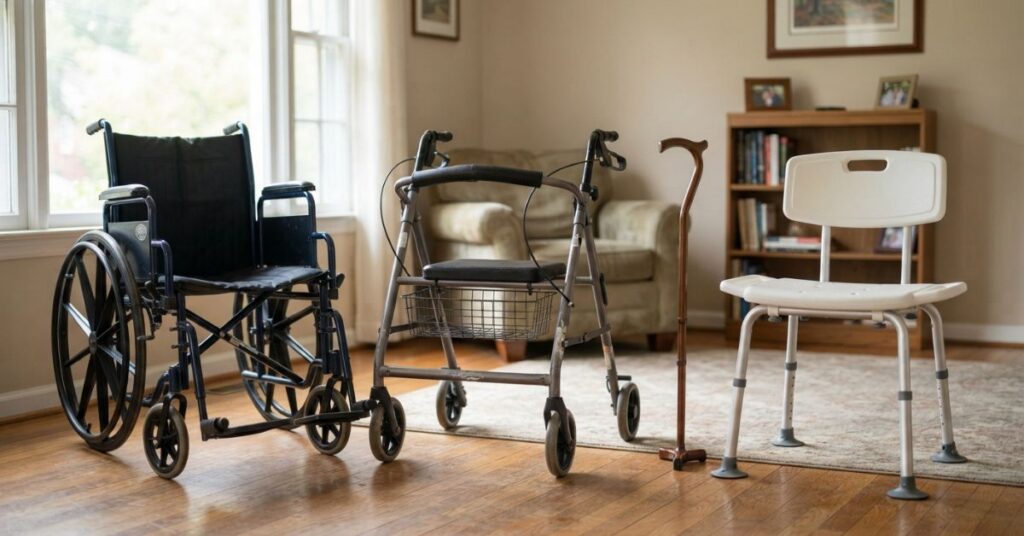

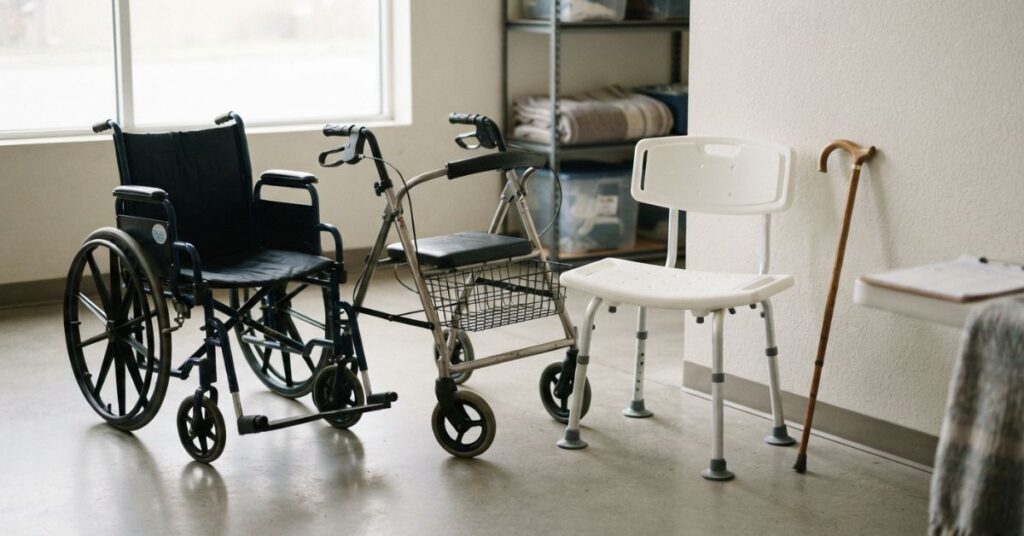
Some of it, yes. Once nobody needs them, walkers, canes, shower chairs, manual wheelchairs, and lift chairs are basically household items, and we price them like anything else in the house.
The rest isn’t yours to sell. Rentals go back to the supplier, oxygen gear often still belongs to them too, and prescription devices like a CPAP don’t go on the tables.
Which Medical Equipment Can Be Sold at an Estate Sale?
If you could pick it up at a pharmacy or medical supply store without a prescription, you can usually sell it. That includes walkers, rollators, canes, shower chairs, bath benches, raised toilet seats, transport chairs, and most manual wheelchairs.
Give everything a wipe first. Plenty of the buyers are caregivers shopping for their own mom or dad, and a clean rollator sells faster than one that looks like it came straight from a hospital room.
Why Prescription Medical Devices Stay Out of the Sale
Anything sold only on a doctor’s order is a different story. Under FDA labeling rules, prescription devices carry a caution that federal law restricts them to sale by or on the order of a licensed practitioner.
So we take the CPAP, the oxygen concentrator, and the nebulizer out of the room before anything gets priced.
Check Whether Medical Equipment Was Rented Before You Sell It
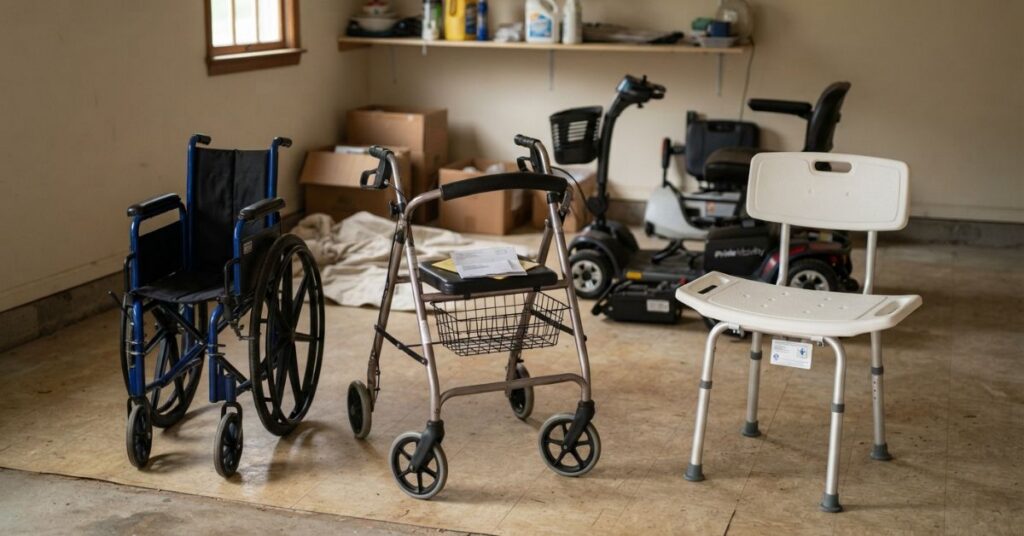
Before you put a price on a hospital bed, a power wheelchair, an oxygen setup, or a patient lift, find out who owns it. Insurance often covers these as rentals.
Medicare notes that some items become the patient’s after a certain number of rental payments, and others never do. Look for a supplier sticker or the delivery paperwork and call the company. If it’s still theirs, they’ll set up a pickup.
Where to Donate Medical Equipment in Montgomery County
Maryland’s Department of Aging runs a free Durable Medical Equipment Re-Use Program. Donated equipment is cleaned, repaired, and passed on to Marylanders who need it, regardless of age or insurance.
Montgomery County residents can drop donations at the Rockville Senior Center, at Easter Seals in Silver Spring, or at the Shady Grove Transfer Station in Derwood. What the program accepts changes over time, so check its current list before you bring anything.
What Medical Equipment the Maryland Program Accepts
The state program doesn’t take everything, and its list of accepted and excluded items gets updated. Check the Maryland Department of Aging’s DME Re-Use page, or call 410-767-1100, to confirm before you donate.
If the program can’t use something, unopened supplies can sometimes go to a local clinic or charity, but call ahead.
Large Medical Equipment and Home Modifications
Stairlifts, ceiling lifts, and grab bars are bolted to the house. Usually they stay with the property, or the installer comes and takes them out.
A curved stairlift is made for one staircase, so hardly anyone can reuse it. A freestanding lift chair is a different story and can go in the sale with the other furniture.
How iStuffSellers Handles Medical Equipment in an Estate Sale
Darren Hahnfeld is on site for every sale, so show him the medical equipment on the first walk-through. If it’s sorted early into sell, return, and donate, there’s a lot less back-and-forth later.
Our estate sale company then prices the sellable pieces along with everything else in the house. Prescription items stay off the tables, much like the medication and firearms in our guide to restricted items in an estate sale.
Frequently Asked Questions
Yes, a manual wheelchair you own can be sold at an estate sale. Check a power wheelchair first, since many come through insurance and may still belong to the supplier.
No, a CPAP machine is a prescription device and doesn’t belong in an estate sale. Most families return it to the supplier or ask the doctor’s office what to do with it.
If it was rented, the supplier picks it up once you call and end the rental. If the family bought it, you can sell it yourself or offer it to a charity that takes beds.
Yes. The Maryland Department of Aging lists drop-off sites in Rockville, Silver Spring, and Derwood (the Shady Grove Transfer Station), and its website or phone line can tell you which items it’s currently accepting.
Get Help With Medical Equipment in an Estate Sale
Sell it, send it back, or donate it. Nearly every piece of medical equipment lands in one of those three piles, and sorting early keeps the sale simple.
For help with medical equipment in a Montgomery County home, or anywhere in Northern Virginia and Washington, DC, call 301-401-6688. iStuffSellers has been in business since 2011 and is licensed, bonded, and insured.