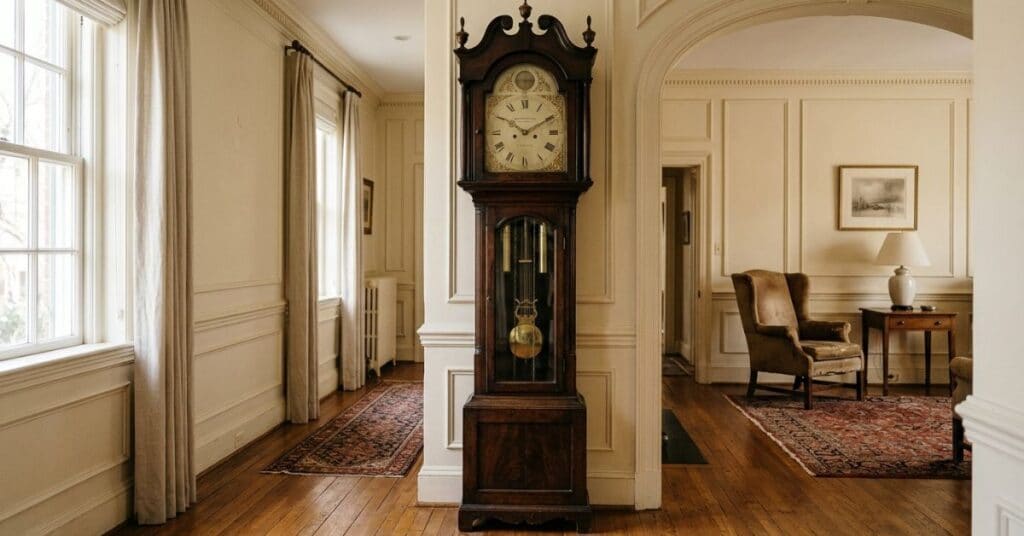

Decide whether the family is keeping or selling a grandfather clock before anyone tries to move it. A floor clock has to be taken apart a little before it travels, and if it’s going to be sold, it may not need to leave the room until a buyer takes it home.
That one decision answers most of how to sell a grandfather clock from an estate. Once you know the plan, the clock either sells with the rest of the house, goes to auction, or gets packed for a relative’s home.
Should the Family Keep or Sell the Grandfather Clock?
Ask the family about a grandfather clock early, because it’s one of the hardest pieces in the house to move twice. Someone who wants it should say so before the estate sale is staged and priced.
Be honest about space. A floor clock needs a spot with enough height and a level floor, and not every Washington, DC condo or rowhouse has one to spare.
Smaller clocks are an easier call. Mantel clocks, shelf clocks, and wall clocks pack like other fragile pieces, so they’re simple to split among relatives or add to the sale.
How to Prepare a Grandfather Clock Before It Moves
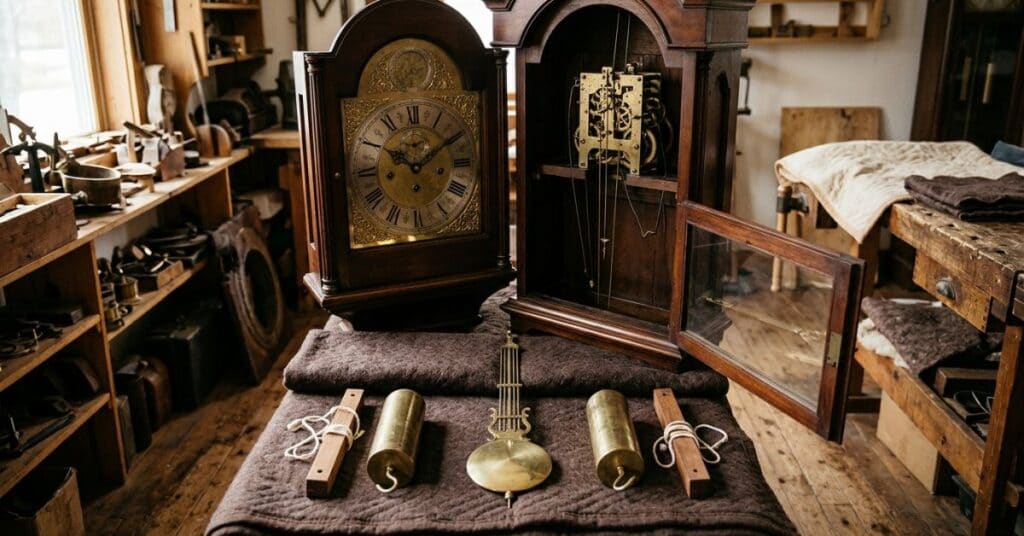
A grandfather clock needs its weights and pendulum taken out before it’s moved. Howard Miller’s instructions for moving a floor clock start with securing the cables or chains, stopping the pendulum, and lifting out the weights.
On a cable-driven clock, the weights get wound all the way up and foam blocks go above the cable pulleys to hold tension. On a chain-driven clock, a wire or string through the chain links just below the sprocket keeps the chains from slipping off.
After that, the pendulum comes out, and so do the tubes on a clock with tubular chimes. Handle the pendulum and weights with cotton gloves or a soft cloth so they don’t pick up fingerprints.
Labeling the Weights on an Antique Clock
Label each weight with its position before it comes out. Hermle’s guide to moving a grandfather clock says to mark each one left, center, or right so the clock goes back together correctly.
Wrap each weight on its own so the label stays put. Keep the weights and the pendulum together, so nothing gets separated from the clock on moving day.
Moving a Grandfather Clock Out of a Northwest DC Home
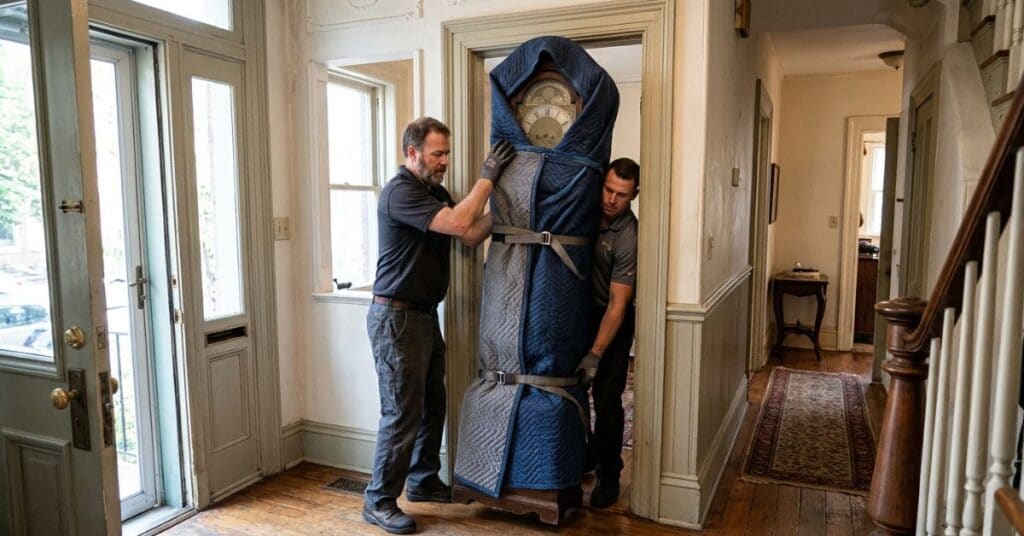
Keep a grandfather clock upright when it moves, as Howard Miller’s moving steps say. That’s harder than it sounds in a lot of older homes.
In Northwest DC, narrow rowhouse stairs, front-stoop entries, and tight hallways in places like Georgetown and Mount Pleasant leave little room to turn a tall case.
When a clock is headed to an offsite auction, iStuffSellers’ own crew and trucks pick it up and plan around your move-out date.
Selling a Grandfather Clock at the Estate Sale
Selling a grandfather clock at the estate sale means it only moves once. It stays in place while buyers look at it, and it leaves with the person who buys it.
This works well when the house is full and the clock is one of many good pieces. Buyers coming for the furniture and silver will see the clock in the same rooms.
Sending an Antique Clock to Auction
Antiques are among the pieces that tend to sell best at auction, so an older clock with collector interest may be a better fit there. iStuffSellers runs onsite and offsite estate auctions.
Darren Hahnfeld gives anything valuable a real value before it’s listed, so nobody is guessing. For more on the trade-offs, see our comparison of an estate sale vs auction vs consignment, and for how values get set, read what your antiques are worth.
Setting Up a Family Clock in Its New Home
Set the clock up using its original setup instructions if you still have them. Howard Miller’s guide says to make sure the cables sit correctly on the pulleys, or the chains on the sprockets, before the clock runs again.
If the instructions are gone, a local clock repair shop can help with setup.
Frequently Asked Questions
Should I hire movers for a grandfather clock?
Howard Miller recommends hiring a professional furniture moving company for a floor clock. Hermle’s guide suggests getting a friend or two to help lift if you move it yourself.
Can I wind a grandfather clock with the weights off?
No, a grandfather clock should never be wound without its weights installed, according to Howard Miller. On a cable clock, wind the weights all the way up before you take them off.
How do I get a grandfather clock to stand straight after a move?
Adjust the clock’s leveling feet until it stands straight and steady, as Hermle’s guide describes. The same guide covers fine-tuning the timekeeping with the nut at the bottom of the pendulum rod.
What if no one in the family wants the clock?
A clock nobody wants can be sold at the estate sale or sent to auction with other good pieces. iStuffSellers can tell you which fits during the walkthrough, before anyone takes it apart.
Get Help With an Estate Clock in Northwest DC
A grandfather clock is easier to handle once the family decides to keep it or sell it. From there, it’s a matter of prepping it right and choosing where it sells.
Call iStuffSellers at 301-401-6688 to set up a free consultation. As an estate liquidator in Northwest DC, we’ve served families across the DC metro since 2011, and iStuffSellers is licensed, bonded, and insured.