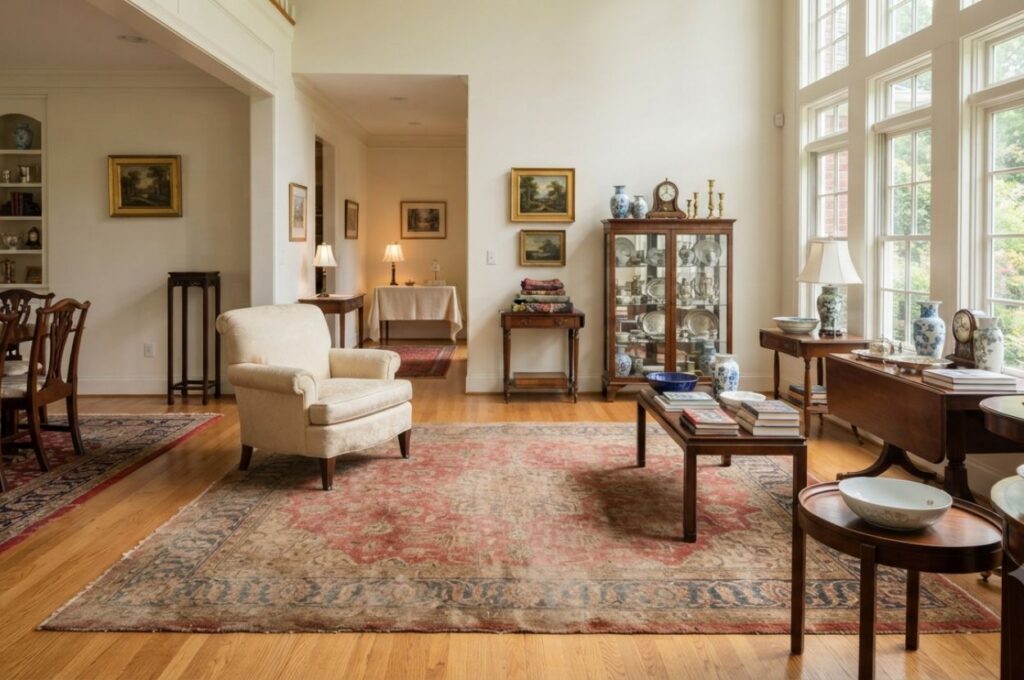

Your household antiques are probably worth less than you expect, and the reliable way to find out is sold auction results for comparable pieces, not asking prices. Free research will handle most of what you own. A credentialed valuation is worth paying for when a single item could clear roughly $5,000, or when your document has to satisfy someone else.
The difficulty is that the free tools are genuinely good for some categories and quietly misleading for others. Which of those you are holding is rarely obvious from the object itself.
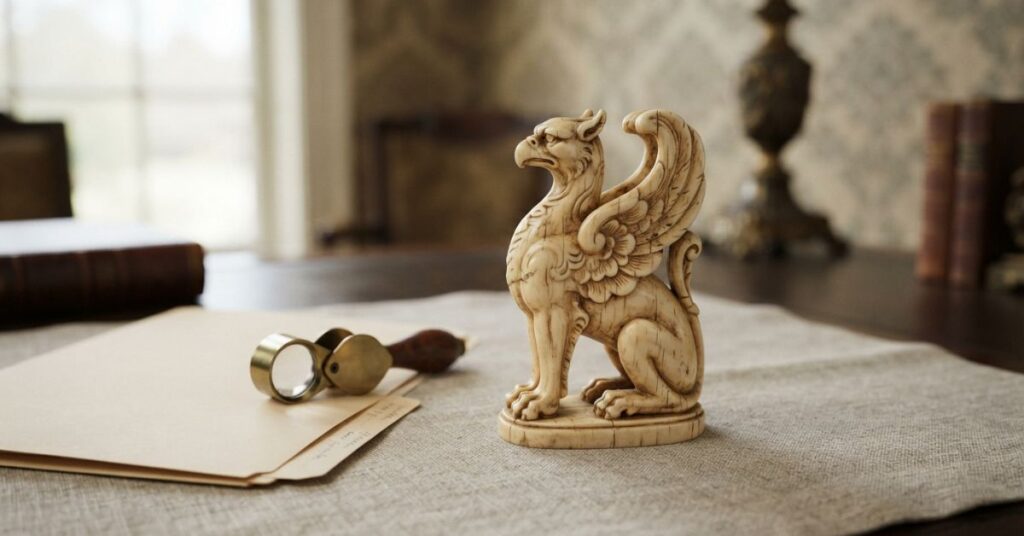
How to Find Out What Antiques Are Worth: Start With Sold Prices
The only number that tells you what an antique is worth is what a comparable piece actually sold for, in a real sale, recently. Everything else is an opinion with a price tag attached.
The LiveAuctioneers price results database holds tens of millions of realized results from thousands of auction houses, and Invaluable aggregates a similar pool. WorthPoint’s Worthopedia is a subscription archive covering close to two decades of sold prices.
For higher-value property, go straight to the houses. Sotheby’s and Christie’s publish searchable past results with photographs and catalog descriptions, which lets you measure your piece against a professionally described example.
Free Antique Valuation Routes and What Each One Is Good For
Free valuation routes are worth using, provided you know what each can and cannot tell you. None substitutes for a hands-on examination of a significant piece.
- Sold marketplace listings. Filter to completed and sold, never active. Reliable for common ceramics, glass and collectibles with high turnover.
- Auction house estimate requests. Regional and national houses review photographs at no charge and say whether a piece is saleable.
- Public library databases. Many DC metro library systems give cardholders access to price guides that are otherwise paid.
- Category references. Kovels for marks and general antiques, Replacements for china and flatware patterns, and the NGC price guide for United States coins.
- Museum reference help. Curatorial staff sometimes assist with identification, but the Smithsonian does not provide appraisals as a matter of policy.
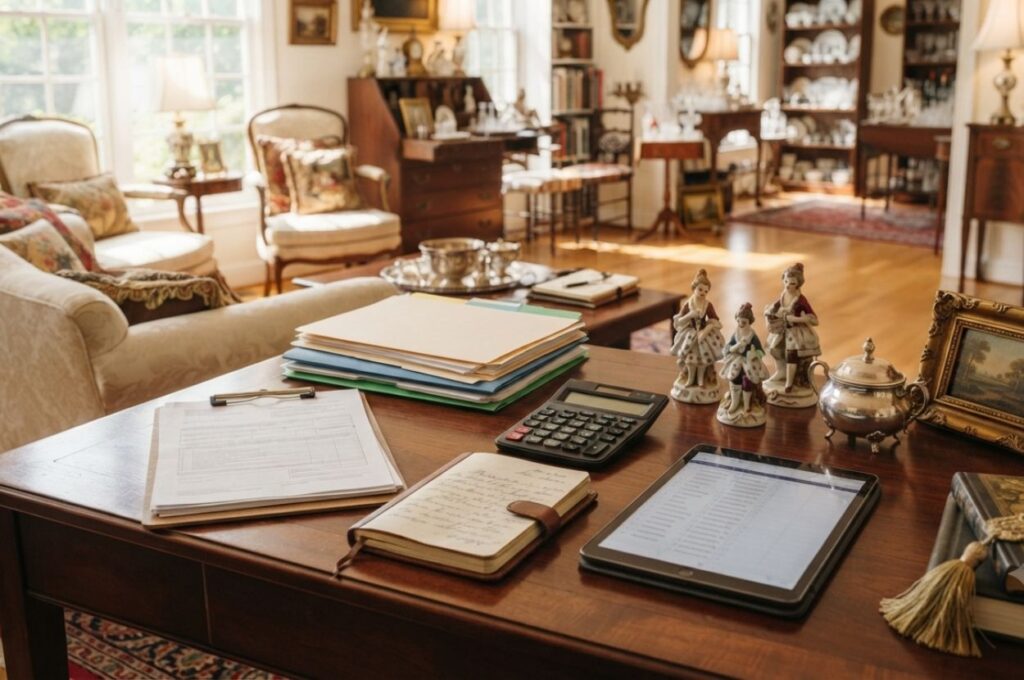
How to Read Comparable Sales Without Overvaluing Your Antiques
Comparable sales only work when you compare like with like, and most owners overvalue by measuring against the best example ever sold. Use sold prices exclusively, because an asking price proves only that someone wanted a number.
Match four things before accepting a comparable: the same maker or attribution, the same form and size, a similar condition grade, and a sale within the last two to three years. A signed piece and an unsigned one in the same style are not comparable.
Then read the whole distribution rather than the top result. If twelve examples sold between $180 and $400 and one brought $2,900, the outlier had something yours probably does not. Subtract the seller’s commission to see what a sale would actually return.
How to Value Estate Items by Maker's Marks and Hallmarks
Marks are the fastest route from an anonymous object to a researched value, because they identify the maker, often the date, and sometimes the metal standard. Photograph every mark under good light, magnified, before you start searching.
For silver, the Online Encyclopedia of Silver Marks, Hallmarks and Makers’ Marks is the standard free reference, covering American makers, coin silver, silverplate and world hallmarks; it is archived by the Library of Congress. British hallmarks encode the assay office, the standard and a date letter, which together date a piece to the year.
Furniture marks live in drawer bottoms, on case backs and under seat rails. Porcelain marks sit on the foot rim and often changed by decade, so the mark itself dates the piece. Bronze and art glass carry signatures that are frequently faked.

Which Antiques and Estate Items Justify a Formal Valuation
A formal valuation is justified when the money at stake far exceeds the fee, or when a third party will read the document.
| Item Category | Typical Value Driver | Formal Valuation Worth It? |
|---|---|---|
| Sterling silver flatware and hollowware | Maker, pattern, troy weight, sterling or plate | Not per piece; yes for a full service by a leading maker |
| Mid-century modern furniture | Designer attribution, manufacturer label, original finish | Yes for labeled designer work, no without a label |
| Fine art, paintings and prints | Artist, authenticity, medium, size, exhibition history | Yes for any signed work by a listed artist |
| Porcelain, china and glass | Pattern, mark, completeness of the service, hairlines | Rarely; replacement services price most patterns |
| Gold and silver coins | Metal content, date and mint mark, third-party grade | Yes for key dates and graded rarities |
| Jewelry and watches | Metal content, stone quality, signed maker, movement | Yes once a piece could reach a few thousand dollars |
| General antique furniture | Period, construction, original surface | Usually not; demand is thin |
| Sports, movie and advertising memorabilia | Authenticity, condition grade, provenance | Yes for graded or documented items |
| Asian antiques | Period, reign mark, material, authentication | Yes; misattribution runs both ways |
Red Flags in Free Online Valuations and Walk-In Offers
Treat any valuation that arrives without an examination as marketing rather than analysis. A photograph cannot establish metal content, detect a replaced element, or separate a period bronze from a later cast.
Four patterns should stop you. A single number with no supporting comparables. A valuation offered by the same party who wants to buy the item. Pressure to decide during the visit. And a figure quoted without naming the type of value, since insurance replacement, fair market and liquidation figures can differ by a multiple.
An owner told early that a cherished piece is modest is better placed than one who learns it at the register.
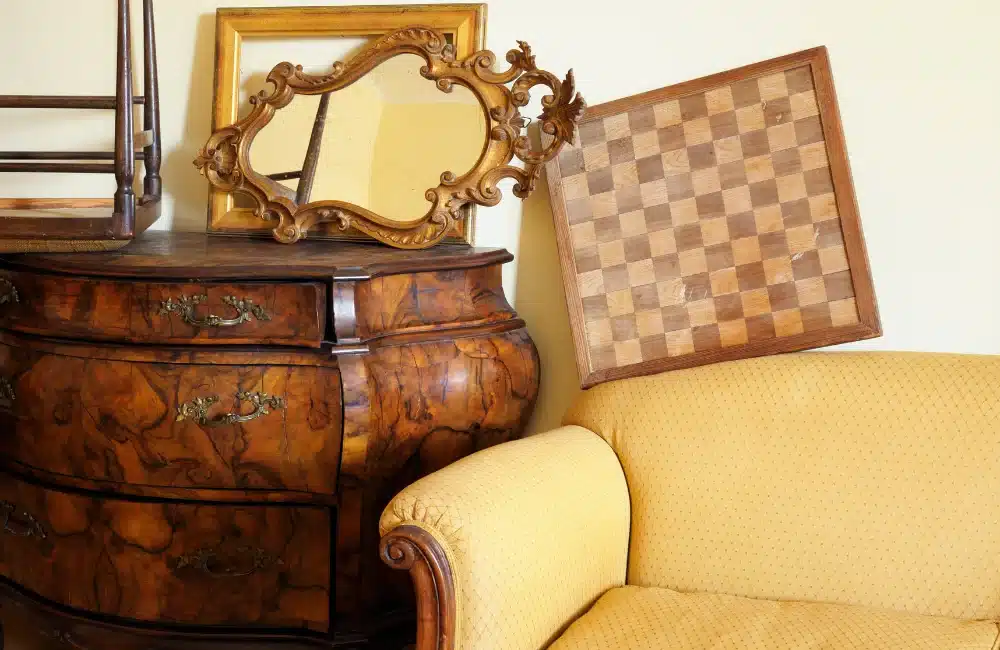
How Condition and Provenance Move an Antique's Value
Condition moves value more than almost any other factor, and the movement is usually downward and larger than owners expect. A hairline in a porcelain bowl, a replaced foot, a refinished surface or a trimmed print margin can remove a substantial share of the value, and repair does not restore it.
Originality is the related test. Collectors pay for untouched surfaces, original hardware and original finishes, so polishing a bronze patina or refinishing a chest can convert a strong piece into an ordinary one in an afternoon.
Provenance moves value upward, but only with evidence. A documented chain of ownership, an exhibition label or an original bill of sale can lift a result meaningfully. Family recollection alone rarely does, because the market prices paper rather than stories.
When a Credentialed Antique Valuation Is Genuinely Necessary
A credentialed valuation becomes necessary the moment someone other than you has to rely on the number. That covers an estate inventory filed with a register of wills, a division among heirs, an insurance schedule, a divorce settlement, and charitable donations, where the IRS requires a qualified appraisal for non-cash gifts above $5,000 under Publication 561, current as of 2026.
Credentials are checkable. The International Society of Appraisers and the American Society of Appraisers publish member directories searchable by location and specialty.
At iStuffSellers, Darren handles that work personally across antiques, fine art, mid-century modern furniture, sterling silver, coins, jewelry, watches, porcelain and memorabilia. Our appraisal process, appraisal cost guide and licensed appraisal services set out the procedure, the fees and the scope.
Frequently Asked Questions
Search sold auction results on LiveAuctioneers or Invaluable, filter marketplace searches to sold listings, and request a free estimate from a regional auction house for anything significant. Free research is least reliable where authenticity is the real question.
They are a useful screen and a poor conclusion, because no one can test metal content, spot a replacement or judge originality from a photograph. Use them to decide what deserves a closer look, not as the basis for a sale.
Photograph the mark magnified under strong raking light, then search a category reference such as the Online Encyclopedia of Silver Marks, or a general marks guide for ceramics and metalware. Note where the mark sits, since position helps confirm a period.
Worth usually means fair market value, while what you receive depends on the route, the timing and the commission. One object can produce three legitimate figures for insurance, estate settlement and a prompt sale. Ask which value you are being quoted.
A full-service estate liquidator assesses the entire contents, identifies the pieces that warrant research or a written report, and prices the rest for sale. Darren is on site personally, the company runs one estate sale at a time, and the trucks and crew are in house. Our estate appraisal services cover the household in one visit.
No. Cleaning, refinishing and polishing routinely remove value, because collectors pay for original surfaces and original patina. If you are preparing to sell furniture, silver or china, our guide to selling antiques from an estate covers the sorting decisions.
Schedule an Estate Valuation in the DC Metro
Finding out what your antiques and estate items are worth starts with sold prices, marks and an honest look at condition, and for most of a household that research is enough. The pieces that fall outside it deserve an examination in person.
If you have antiques or estate contents to evaluate in Maryland, Northern Virginia or Washington, DC, schedule a free consultation with iStuffSellers by calling 301-401-6688. We will assess the contents on site, tell you which pieces warrant a formal report, and handle the sale so you can focus on the decisions that matter most.