How much of a house sells at an estate sale depends on what’s in it, and no trustworthy source publishes one industry-wide percentage. The mix of items matters most, followed by pricing, markdowns, advertising and local demand.
Almost every sale ends with something left over, and that’s normal. The better question is which of your things are likely to sell and what happens to the rest.

Is There an Average Estate Sale Sell-Through Rate?
No, there isn’t a reliable average, because results vary so much from one house to the next. EstateSales.NET’s yearly industry surveys cover how companies run sales, but they don’t report what share of items sells.
They do show that leftovers are routine. About 75 percent of sellers told the EstateSales.NET 2024 industry survey that they donate unsold items.
What Sells Best at an Estate Sale
The best sellers are things people come looking for, like jewelry, sterling silver, coins, tools, collectibles, labeled mid-century furniture and signed art. Dealers and collectors often line up hoping to find them.
Plain everyday goods move well too. Consumers’ Checkbook says sellers are often surprised by what sells, including worn clothes, broken toys and beat-up pots.
Useful household things tend to go early, too, like garden tools, kitchen gear and small furniture that fits in a car. If a shopper can carry it out the door that morning, it has a good shot.
What Doesn't Sell at Estate Sales
The hardest things to sell at most estate sales are formal china sets, crystal glasses, big dark wood furniture like china cabinets, and silver-plated serving pieces. People just don’t want them the way they used to, since homes are smaller and dinners are more casual.
The Washington Post quoted a local auctioneer back in 2015 saying younger buyers didn’t want brown furniture or silver-plated tea sets. Next Avenue, writing in Forbes, reported the same move away from formal china.

Do Antiques and Fine China Still Sell at Estate Sales?
Yes, good antiques and single pieces from known makers still sell, even when full china sets and factory furniture don’t. A signed piece or a popular pattern finds its buyer, but a service for twelve is up against every other set for sale.
Good period furniture has also picked up. Kovels reported in 2026 that antiques from before the 1920s were catching on with designers, which helps quality pieces far more than factory-made ones.
How Estate Sale Pricing Affects Sell-Through
Pricing matters more than anything else you control. Price something near what buyers really pay and it sells, but price it like a hopeful online listing and it sits.
Online asking prices usually run well above what things actually sell for. Get the price right on day one and there’s less left for the markdown days.
At iStuffSellers, each item is priced on its own against recent comparable sales, and our guide to how estate sale items are priced explains that process step by step.
How Estate Sale Markdowns Work on the Final Days
Markdowns on the last days of an estate sale are there to clear out what didn’t sell at full price. Most companies cut prices on day two and again on the final day, though each one does it a bit differently.
Consumers’ Checkbook describes one common pattern for a Friday-to-Sunday sale: 25 percent off Saturday morning, 50 percent Saturday afternoon and 75 percent on Sunday. Pricier items often have a floor so they aren’t given away in the last few hours.
How Advertising and Local Demand Change What Sells
More serious buyers through the door means more of the house sells, so advertising makes a big difference. Photos posted ahead of time, the company’s own buyer list and calls to collectors all bring in people ready to buy.
Local demand sets the ceiling. The DC Metro pulls buyers from Maryland, Virginia and the District, but a category that few people want will struggle anywhere.
How Condition and Staging Affect Estate Sale Results
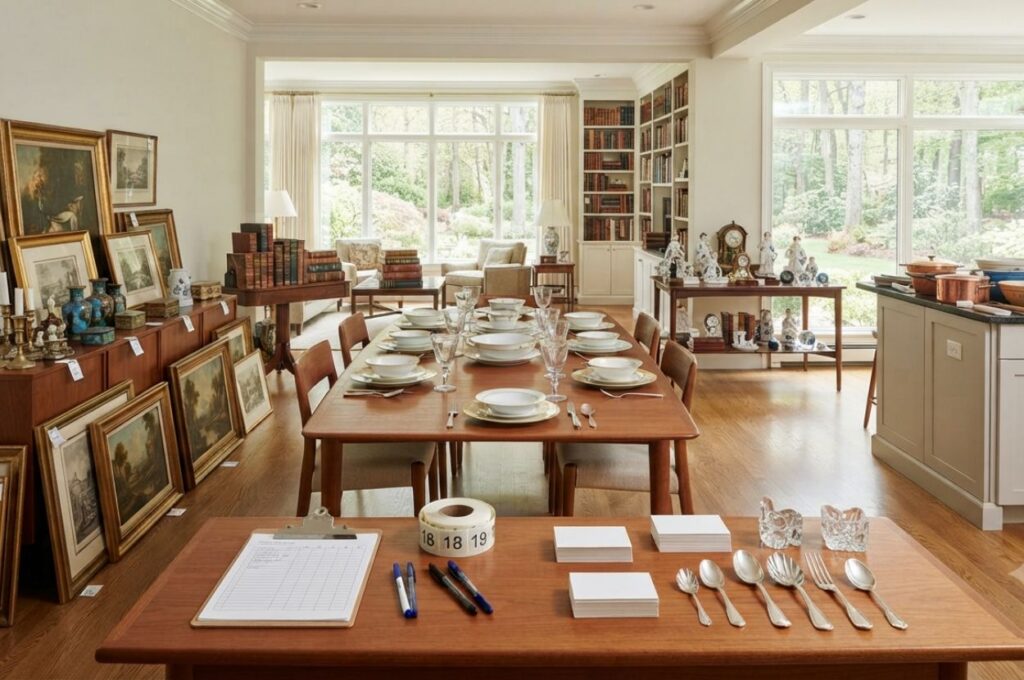
Clean, complete items that are easy to see sell faster and for more. A dinner set missing half its plates or a lamp that doesn’t work turns buyers away.
That’s why the setup matters. When shoppers can see and reach everything, good pieces don’t get missed, and the pricing team can spot anything that needs a closer look.
What Happens to Items That Don't Sell at an Estate Sale
Leftovers usually go to donation first, then consignment, a buyout of what’s left or a haul-away. What makes sense depends on what’s left and how soon the house has to be empty, so it’s worth planning before the sale starts.
Our guide to what happens to unsold items after an estate liquidation walks through each option, including which Northern Virginia charities pick up furniture.
Frequently Asked Questions
Full sets of formal china usually sell for a small fraction of what they cost new, and many don’t sell at all. Single pieces from popular makers or patterns do better, especially when they reach someone trying to complete a set.
Brown furniture struggles because many buyers now live in smaller homes and want lighter, more flexible pieces. Well-made antiques and signed pieces are the exception, since collectors still pay for quality and age.
Yes, most estate sales cut prices on the last day, often by half or more. Companies usually set a floor on higher-value items so they don’t sell for less than they’re worth.
There’s no reliable number, because what sells depends on the contents, pricing and turnout at each sale. Houses full of collectible categories clear more than houses full of formal furniture and china, and some leftovers are normal every time.
Schedule an Estate Sale Consultation in the DC Metro Now
Knowing what’s likely to sell before the doors open makes it much easier to plan for what’s left. An honest look at the contents is the best place to start.
iStuffSellers offers free consultations across Maryland, Northern Virginia and Washington, DC, and you can book one at 301-401-6688. We’ll walk through the house, tell you which categories should move and explain how our estate sale services handle the rest.