
When you are settling a family estate or clearing out a longtime home, a collection often turns up that no one quite knows what to do with: a box of coins in the basement, binders of baseball cards, longboxes of comics, an album of stamps. Some of it may be genuinely valuable, and some of it may be worth far less than family lore suggests. The challenge is telling the difference before anything leaves the house.
This guide walks through how to identify, value, and route estate collectibles by category, so you can make informed decisions rather than guessing. The goal is to reduce the workload and help you sell the right items through the right channel, without giving away something rare or overpaying to move something common.

Start by Identifying and Sorting the Collection
The process begins with an inventory. Before you can value anything, you need to know what you have and roughly how much of it there is. Sort the belongings into broad categories first: coins and currency, trading cards (sports and non-sports), comic books, stamps, and everything else, such as records, autographs, or militaria.
Keep each category together and resist the urge to clean, polish, or repackage anything. Cleaning a coin, for instance, can reduce its value substantially, and pulling a comic out of its bag can introduce creases that matter to a grader.
How to Tell Which Estate Collectibles Are Valuable
As you sort, watch for a few signals that separate potentially high-value items from common ones. Age is one: the most sought-after sports trading cards were generally produced through the late 1960s, while cards made from about 1980 onward were printed in such volume that most carry modest value.
Condition is another, and it matters enormously for cards and comics. Rarity, mint marks on coins, and whether an item is already professionally graded all move the needle.
Photograph anything that looks unusual or clearly old, and note quantities. This inventory becomes the foundation for every decision that follows, and it is the same starting point we recommend in our broader guide on what to do with inherited items you don’t want.

How Collectibles Are Valued by Category
Value is category-specific. What drives price for a coin has little to do with what drives price for a comic, so it helps to understand each on its own terms before you talk to a buyer.
Coins and Currency
Coin value comes from a blend of metal content, rarity, mint mark, and condition. Common-date silver coins are often worth close to their melt value, while key dates and high-grade examples can be worth many multiples of that. Look for mint marks, unusual dates, and any coins already sealed in graded holders from services such as PCGS or NGC. Because precious-metal prices shift daily, a coin’s baseline can move week to week, so timing and current comps matter.
Sports Cards
For sports cards, professional grading is the language of the market. Buyers price cards using current sold data from services such as PSA and Beckett, combined with population reports that show how scarce a given card is in a given grade.
Pre-1980 cards in strong condition are where the real value tends to sit; a card’s centering, corners, edges, and surface can move it across several price tiers. Readers who want a dedicated path for that vertical can review our page on how to sell sports memorabilia and sports cards.
Comic Books
Comics follow a similar logic. Golden Age (roughly late 1930s to early 1950s) and Silver Age (mid-1950s to about 1970) issues carry the highest values, particularly first appearances and key issues in clean condition. Professional grading through a service such as CGC can significantly affect what a serious buyer will pay, since it removes the guesswork on condition.
Stamps, Records, and Everything Else
Stamps are valued on rarity, condition, and cancellation, and large accumulations are often worth less per piece than owners expect. Vinyl records, autographs, and militaria each have their own specialist markets. For these mixed categories, a general collectibles buyer or appraiser can triage the collection quickly and flag the few items worth pursuing individually.

Get an Appraisal Before You Sell Anything
An honest valuation is the single most important step, and it does not have to cost anything up front. Many established buyers and estate specialists offer free evaluations with no obligation to sell, which is a reasonable place to start when you simply need to know whether a collection is worth hundreds or tens of thousands.
A credible appraisal draws on three data points: real sold-auction results from major platforms, population or scarcity data for graded items, and the hands-on market experience of someone who handles these items regularly.
Why Work With an Estate Liquidator for a Mixed Collection
For an estate with a mixed collection, the practical advantage of working with an estate liquidator is coordination. Rather than hauling coins to one shop, cards to another, and comics to a third, a full-service estate sales company can assess the contents in place, bring in category specialists where a piece warrants it, and handle the entire process as part of settling the estate.
iStuffSellers has served the DMV since 2011 as licensed and insured estate liquidators, and we routinely coordinate specialist appraisal for high-value pieces before recommending a route to market.
Choose the Right Selling Channel for Each Category
Once you know what you have and what it is worth, the question becomes how to sell it. There is rarely one right answer for an entire collection; different categories reward different channels.
For a broad mix of collectibles that you want to move efficiently as part of clearing a home, selling to or through an estate liquidation specialist keeps the process contained. Our sell collectibles service is built for exactly this situation, and for owners who would rather earn on a piece over time than sell outright, collectibles consignment in Rockville, MD is often a better fit for individually valuable items.
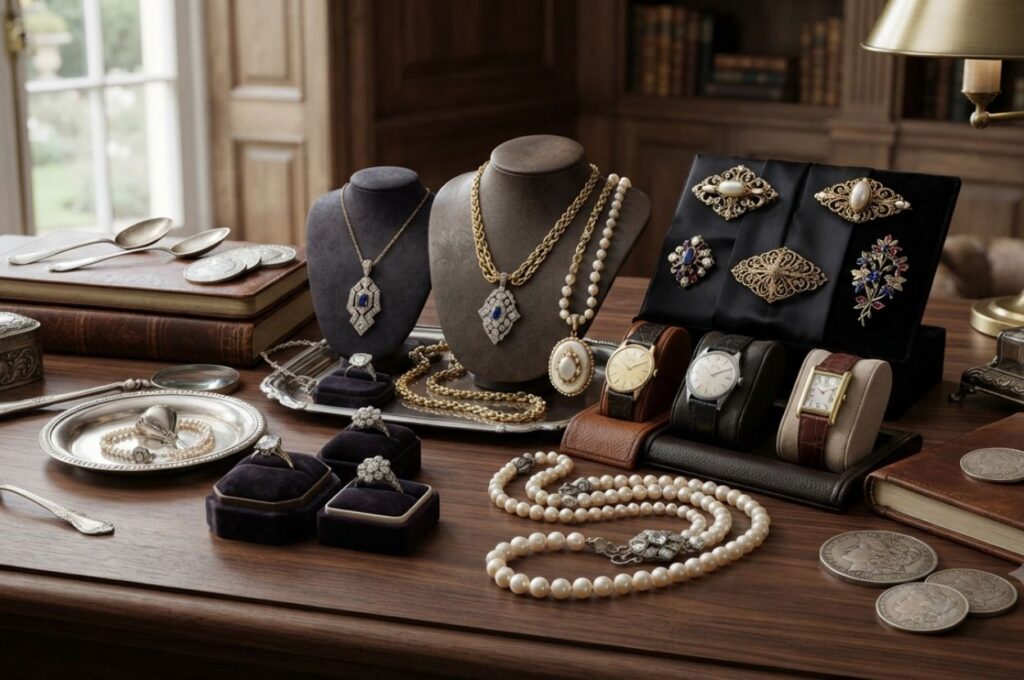
Where to Sell High-Value Pieces vs. Bulk Lot
High-value single pieces, such as a key-date coin or a graded first-appearance comic, may do best through a specialist buyer or auction house that can reach collectors able to pay top prices.
Lower-value bulk lots, on the other hand, are usually better sold as a group during an estate sale than listed one at a time online, where the time and shipping cost can outweigh the return.
The right mix depends on the scope of the collection, which is why an assessment comes first.
Watch for Common Mistakes With Estate Collectibles
A few missteps recur often enough to be worth naming. The first is cleaning items, which can quietly erase value on coins and cards. The second is assuming that age alone equals worth; many old items are common, and many modern items are overproduced.
The third is breaking up a collection before it has been assessed, since a complete set or a curated grouping can be worth more together than scattered. The fourth is discarding paperwork, such as certificates of authenticity, grading slips, or original receipts, which support value and speed a sale. Taking a measured approach, and getting eyes on the collection before anything is sorted or sold, protects the estate’s interests.
Frequently Asked Questions
Start with a free, no-obligation evaluation from an established buyer or estate specialist. A credible valuation combines recent sold-auction results, scarcity or population data for graded items, and hands-on market experience. For a mixed estate collection, an estate liquidator can triage everything in one pass and flag the few pieces that warrant individual appraisal.
No. Cleaning a coin can significantly reduce its value, and removing a comic from its protective bag or attempting to flatten it can introduce damage that graders penalize. Leave items exactly as you found them and let a specialist advise on any handling
Not always. The most valuable sports cards were generally produced through the late 1960s, while cards printed from about 1980 onward were overproduced and typically carry modest value. Condition and professional grading matter as much as age, so a common card in worn condition may be worth very little, while a well-preserved vintage card can be worth a great deal.
It depends on the collection. High-value individual pieces often do best through a specialist buyer or auction that can reach serious collectors, while lower-value bulk lots are usually better sold as a group, where per-item listing and shipping costs would otherwise outweigh the return. An assessment helps you decide which items justify individual attention.
Yes. A full-service estate sales company can assess collectibles in place, coordinate specialist appraisal for high-value items, and sell them alongside the rest of the contents, which keeps the entire process contained while you settle the estate.
Get Help Selling an Inherited Collection in Rockville
Settling an estate is a significant life event, and a collection that no one fully understands can add to the workload. The steadier path is to identify and sort the contents, get an honest valuation before anything is sold, and route each category to the channel that serves it best.
iStuffSellers has helped families across the DMV do exactly that since 2011, as licensed and insured estate liquidators who handle the entire process. If you have inherited a collection and are not sure where to begin, schedule a free consultation with iStuffSellers, and we will help you understand what you have and the options for selling it.